
A runny nose, repeated sneezing, a stuffy nose, and watery eyes can leave you wondering: Do I have a cold or allergies? Both conditions can make you feel uncomfortable, and because their symptoms overlap, it isn’t always easy to tell them apart.
The first clue is often the type of symptoms you experience. Itchy eyes, an itchy nose, and repeated sneezing around pollen, dust, or pets often suggest allergies. A sore throat, a new cough, and symptoms that develop over several days may suggest a common cold. Fever and body aches are not typical of ordinary seasonal allergies and may point toward an infection or another cause.
However, no single symptom can confirm what’s causing your discomfort. A cold, seasonal allergies, influenza (flu), and COVID-19 can share several symptoms. You can also experience allergies and a respiratory infection at the same time.
This guide explains how to compare cold and allergy symptoms, understand how long each condition lasts, find appropriate relief, and recognize when to seek medical care.
Cold or Allergies: What’s the Difference?
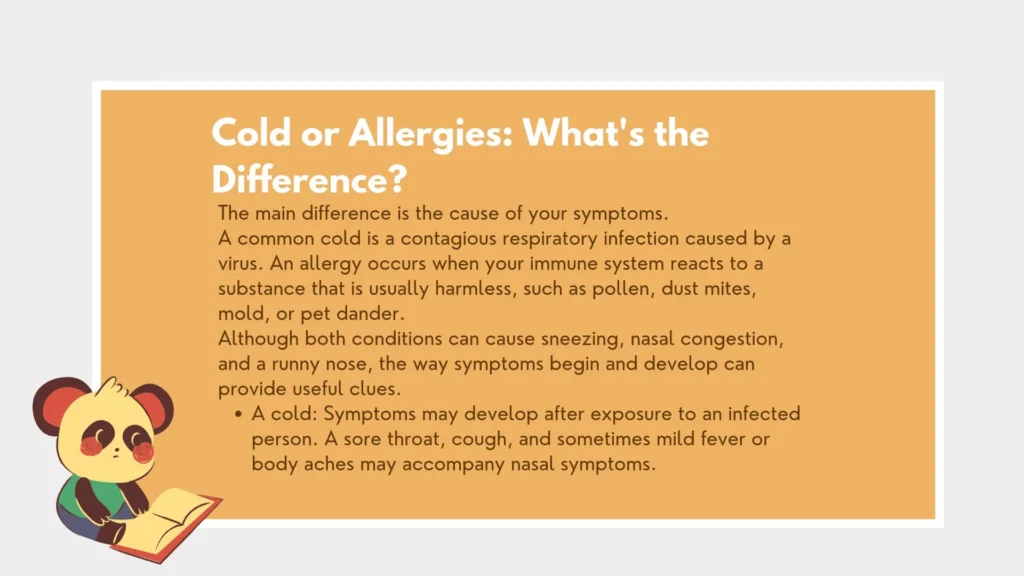
The main difference is the cause of your symptoms.
A common cold is a contagious respiratory infection caused by a virus. An allergy occurs when your immune system reacts to a substance that is usually harmless, such as pollen, dust mites, mold, or pet dander.
Although both conditions can cause sneezing, nasal congestion, and a runny nose, the way symptoms begin and develop can provide useful clues.
- A cold: Symptoms may develop after exposure to an infected person. A sore throat, cough, and sometimes mild fever or body aches may accompany nasal symptoms.
- Allergies: Symptoms often include itching, repeated sneezing, and watery eyes. They may start after exposure to a trigger and continue while that exposure persists.
- A respiratory infection other than a cold: Flu and COVID-19 can cause symptoms that resemble both conditions, so additional assessment or testing may be necessary.
One important difference is contagiousness. You cannot catch allergies from another person, but you can catch a cold or another contagious respiratory infection.
Quick Check: Is It a Cold or Allergies?
If you’re trying to understand your symptoms right now, start with these common patterns.
| What you’re experiencing | What it may suggest |
| Itchy eyes, itchy nose, and repeated sneezing | Allergies are more likely |
| Symptoms that return around pollen, dust, or pets | An allergic trigger is possible |
| Sore throat, runny nose, and a developing cough | A respiratory infection is possible |
| Fever, body aches, and significant fatigue | Consider an infection or another cause |
| Symptoms that improve when you avoid a suspected trigger | Allergies become more plausible |
| Symptoms that improve and then become worse again | Medical assessment may be appropriate |
| Symptoms lasting for weeks without a clear recovery | Allergies or another ongoing condition may be responsible |
These are clues, not diagnostic rules. A cold can cause sneezing and watery eyes, and allergies can cause coughing, fatigue, and throat irritation.
What should you do if you still aren’t sure? Consider the full pattern of your symptoms, how long you’ve had them, and whether you have been exposed to someone who is sick or to a suspected allergen. If symptoms are severe, persistent, or unusual, seek medical advice.
Cold vs. Allergies: Symptoms Compared
A side-by-side comparison makes it easier to recognize the differences between a common cold and allergies.
| Symptom | Common cold | Allergies |
| Runny nose | Common | Common |
| Stuffy nose | Common | Common |
| Sneezing | Common | Often frequent or repetitive |
| Itchy nose | Less typical | Common |
| Itchy, watery eyes | Less typical | Common |
| Sore throat | Common | Possible, often from irritation or postnasal drip |
| Cough | Common | Possible |
| Fever | Sometimes, especially a mild fever | Not caused by ordinary allergies |
| Body aches | Possible | Not typical |
| Fatigue | Possible | Possible, especially when sleep is disrupted |
| Symptom onset | Often develops over several days after infection | May begin after exposure to an allergen |
| Typical duration | Usually improves within about a week, although some symptoms last longer | May continue while exposure to the trigger persists |
| Contagious | Yes | No |
Which Symptoms Are the Strongest Clues?
Some symptoms are more helpful than others when comparing a cold with allergies.
Itching is a useful clue for allergies. An itchy nose, itchy eyes, or an itchy throat combined with repeated sneezing makes an allergic reaction more plausible.
Fever and body aches suggest looking beyond ordinary allergies. These symptoms can occur with respiratory infections, although their presence does not tell you exactly which infection you have.
Duration and triggers also matter. Symptoms that repeatedly appear in a particular environment may indicate allergies, while a new illness that gradually improves over several days may be a cold.
No single clue should be used to diagnose yourself.
How to Tell Whether You Have a Cold or Allergies
1. Pay Attention to Itchy Eyes and Repeated Sneezing
Allergies frequently cause itching in the eyes and nose. You might experience several sneezes in a row, watery eyes, and a runny nose shortly after entering a dusty room or spending time outdoors.
For example, imagine that your nose starts itching and your eyes water whenever you visit a home with cats. If the same pattern occurs repeatedly, an allergic trigger becomes a reasonable possibility.
A cold can also cause sneezing and watery eyes, but pronounced itching is less characteristic.
What to remember: Itchy eyes and repeated sneezing can point toward allergies, especially when you notice a consistent environmental trigger.
2. Check for a Sore Throat, Cough, or Body Aches
A sore throat is common during a cold and may be one of the first symptoms you notice. A cough, headache, or mild body aches can also develop.
Allergies can irritate the throat and trigger a cough, particularly when mucus drains down the back of your throat. However, generalized body aches and fever are not typical features of ordinary seasonal allergies.
If you have several symptoms suggesting an infection, don’t assume that itchy eyes or sneezing rule it out.
3. Think About When Your Symptoms Started
The timing of your symptoms can help you identify a possible cause.
Cold symptoms generally appear after infection with a respiratory virus and often become more noticeable over the first few days.
Allergy symptoms may appear soon after exposure to an allergen. If you are sensitive to pollen, for instance, you may notice sneezing and nasal congestion after spending time outdoors during a period of high pollen exposure.
However, not all allergic reactions begin immediately, and you may not always recognize the trigger. Timing is useful evidence, but it cannot establish a diagnosis on its own.
4. Notice Whether the Symptoms Keep Returning
Recurring symptoms can be an important sign of allergies.
Suppose you develop sneezing, itchy eyes, and a runny nose every time you clean a dusty room. If the symptoms repeatedly follow the same exposure, dust-related allergies may be worth discussing with a healthcare professional.
Seasonal patterns can also help. People with pollen allergies may experience symptoms during particular times of the year, while those sensitive to indoor allergens can have symptoms throughout the year.
Colds can occur at any time of year, so the season alone cannot distinguish a cold from allergies.
5. Consider How You Feel Overall
A cold may leave you feeling generally unwell, especially if you have a sore throat, cough, headache, or mild body aches.
Allergies often produce symptoms concentrated around the nose, eyes, and throat. However, persistent congestion and disrupted sleep can leave you tired and irritable.
For this reason, fatigue alone is not a reliable way to distinguish the two conditions. Consider it alongside itching, fever, body aches, symptom timing, and your possible exposures.
What Do Different Symptom Combinations Mean?
Looking at symptoms together is often more useful than examining each one separately.
Sneezing, Itchy Eyes, and a Watery Nose
This combination is commonly associated with allergies, particularly if symptoms appear after exposure to pollen, dust mites, mold, or animals.
If the symptoms keep returning in the same circumstances, consider tracking your exposure and discussing possible allergy testing with a healthcare professional if they interfere with daily life.
Runny Nose, Sore Throat, and Cough
These symptoms can occur with a common cold or another respiratory infection.
They can also occur with allergies, especially when postnasal drip irritates the throat. Fever, exposure to someone who is sick, and how the symptoms develop may provide additional clues.
Fever, Body Aches, and Fatigue
These symptoms are not typical of ordinary seasonal allergies. They may indicate a respiratory infection, including flu or COVID-19, or another illness.
If symptoms are pronounced, you are at increased risk of complications, or you feel significantly unwell, contact a healthcare professional.
Nasal Congestion That Keeps Returning
Recurring congestion may be related to allergies, but other causes are possible, including nonallergic rhinitis and sinus problems.
Pay attention to possible triggers, how long symptoms last, and whether you also have itching or watery eyes. Persistent congestion deserves assessment if it affects your sleep or daily activities.
Symptoms That Improve and Then Get Worse
A cold can occasionally be followed by a complication, and other infections can have changing symptoms. A sudden worsening after an initial improvement should not automatically be blamed on allergies.
Seek medical advice if your symptoms worsen, return with a fever, or are accompanied by significant pain or breathing difficulties.
How Long Do Cold and Allergy Symptoms Last?
Duration is another useful clue, although it cannot confirm the cause.
How Long Does a Cold Last?
Most common colds improve on their own, often within about a week. Some symptoms, particularly coughing or nasal congestion, can last longer.
Cold symptoms may become most noticeable during the first few days. After that, they should generally begin to improve.
Consider contacting a healthcare professional if your symptoms last more than 10 days without improvement, if a fever persists, or if symptoms improve and then return or worsen. These patterns can indicate that further assessment is needed.
How Long Do Allergies Last?
Allergy symptoms depend on the allergen and how frequently you encounter it.
- Seasonal allergies: Symptoms may persist for weeks or months during a pollen season.
- Indoor allergies: Symptoms may continue throughout the year if exposure to dust mites, mold, or pet allergens continues.
- Occasional exposure: Symptoms may ease when you leave the environment or reduce contact with the trigger.
Unlike a cold, an allergic reaction does not have a predictable recovery period. Symptoms may return whenever exposure occurs.
Can a Cold Last Longer Than Allergies?
A cold can leave you with a lingering cough or congestion even after the main infection has improved. Allergies, meanwhile, can continue for months if the trigger remains present.
The distinction is not simply that short symptoms mean a cold and long symptoms mean allergies. Consider the complete pattern, including itching, fever, exposure, and whether symptoms are improving.
Could It Be COVID-19 or the Flu Instead?
Sometimes, what appears to be a cold may be another respiratory infection.
COVID-19, influenza, and the common cold can cause overlapping symptoms, including coughing, a sore throat, fatigue, congestion, and a runny nose. Flu can also cause fever and body aches, while COVID-19 symptoms vary widely.
Symptoms alone cannot reliably distinguish flu from COVID-19, and some people with either infection have relatively mild symptoms.
Consider testing when appropriate, particularly if you have been exposed to an infected person, have symptoms consistent with a respiratory infection, or need to make decisions about protecting vulnerable people.
If you are at higher risk of complications, contact a healthcare professional promptly. Treatments for flu and COVID-19 may work best when started early.
Can You Have a Cold and Allergies at the Same Time?
Yes. Having allergies does not protect you from catching a respiratory virus.
For example, you may experience itchy eyes and sneezing because of seasonal allergies. A few days later, you might develop a sore throat and cough after being exposed to a virus.
In this situation, both conditions could be contributing to your symptoms. Allergy treatment may help with itching and sneezing, but it will not treat the viral infection.
If your symptoms change noticeably or become more severe, reassess the situation rather than assuming that everything is caused by your usual allergies.
How to Get Relief From a Cold or Allergies
The best approach depends on the cause of your symptoms. A cold usually improves with time and supportive care, while allergy treatment focuses on reducing exposure to triggers and controlling the allergic response.
What Helps a Common Cold?
Most uncomplicated colds can be managed at home.
Get enough rest. Your body needs time to recover. Reduce strenuous activities if you feel unwell.
Drink enough fluids. Water, warm drinks, and soup can help maintain hydration and soothe an irritated throat.
Use saline nasal spray. Saline products can help relieve congestion and loosen mucus.
Try a clean humidifier. Adding moisture to dry indoor air may make breathing more comfortable for some people. Clean the device according to its instructions.
Consider appropriate pain relief. Medicines such as paracetamol (acetaminophen) or ibuprofen may help with fever or discomfort when suitable for you. Follow the product instructions and check with a pharmacist if you are unsure.
Ask about other cold remedies. Some nonprescription medicines can provide temporary relief, but their suitability depends on your age, health conditions, and other medicines.
Antibiotics do not treat viruses and are not a routine treatment for a common cold. Do not take leftover antibiotics or use them without appropriate medical advice.
What Helps Allergies?
Allergy management focuses on reducing exposure and controlling symptoms.
Reduce contact with likely triggers. If pollen appears to worsen your symptoms, monitor local pollen conditions and consider keeping windows closed during high-pollen periods. If indoor allergens are suspected, look for dust accumulation, dampness, or mold and address these problems appropriately.
Consider an antihistamine. Antihistamines can help relieve symptoms such as sneezing, itching, and a runny nose. Some cause drowsiness, so check the label and ask a pharmacist which option is appropriate.
Ask about a corticosteroid nasal spray. These sprays reduce inflammation inside the nose and may help with persistent allergic rhinitis. They need to be used according to the product instructions, and some work best with regular use.
Try saline nasal rinsing if appropriate. A saline rinse may help remove mucus and allergens. Use sterile or distilled water, or water that has been boiled and cooled, rather than untreated tap water.
Keep a symptom diary. Record when symptoms occur, what you were doing, and whether you were exposed to pollen, dust, pets, or other possible triggers. This information may help a healthcare professional assess whether allergies are responsible.
Allergy medicines do not cure every underlying cause of congestion. If symptoms persist despite appropriate treatment, seek professional advice.
Are Cold Medicines and Allergy Medicines Interchangeable?
Not necessarily.
Antihistamines are mainly used to treat allergy symptoms. They do not eliminate the virus responsible for a cold. Some combination cold medicines contain antihistamines, pain relievers, or decongestants, so check their active ingredients before combining products.
Over-the-counter medicines are not suitable for everyone. Ask a pharmacist or healthcare professional before using them for a child, during pregnancy or breastfeeding, or if you have a chronic condition or take other medicines.
For young children, follow age-specific guidance carefully. The CDC does not recommend over-the-counter cough and cold medicines for children younger than six because they can cause serious side effects.
How to Prevent Colds and Reduce Allergy Symptoms
Prevention depends on whether you are trying to avoid a contagious infection or reduce exposure to allergens.
How to Reduce Your Risk of Catching a Cold
You cannot avoid every respiratory virus, but practical precautions may reduce your risk.
- Wash your hands regularly, particularly after being in public places or caring for someone who is ill.
- Avoid close contact with people who have respiratory symptoms when possible.
- Improve indoor ventilation when practical.
- Avoid touching your eyes, nose, and mouth with unwashed hands.
- Consider a well-fitting mask in crowded indoor settings or when respiratory viruses are circulating, particularly if you or someone nearby is at higher risk.
- Stay home when you are sick and follow current local guidance for respiratory infections.
These measures can also help reduce the spread of other respiratory viruses.
How to Reduce Allergy Triggers
Allergy prevention involves identifying and limiting exposure to the substances that trigger your symptoms.
- Monitor pollen levels if you suspect seasonal allergies.
- Keep windows closed when outdoor pollen exposure is high, where practical.
- Wash bedding regularly and reduce dust accumulation.
- Address leaks and damp areas that can contribute to mold growth.
- Limit exposure to animals if pet allergens trigger your symptoms.
- Keep a record of recurring symptoms and discuss persistent problems with a healthcare professional.
You do not need to eliminate every possible allergen from your environment. Focus on triggers that appear to affect you and on changes that are practical and effective.
When Should You See a Doctor?
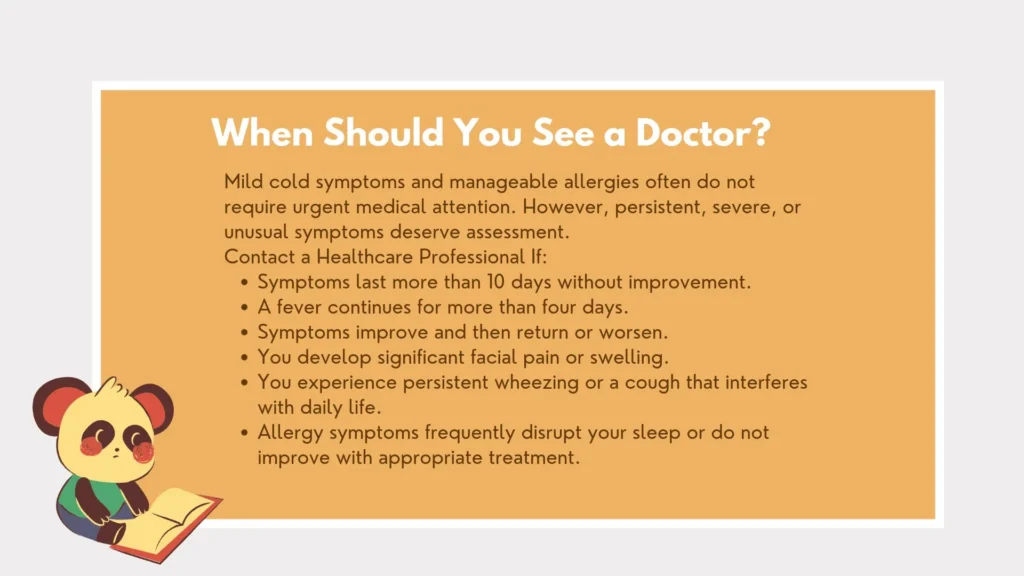
Mild cold symptoms and manageable allergies often do not require urgent medical attention. However, persistent, severe, or unusual symptoms deserve assessment.
Contact a Healthcare Professional If:
- Symptoms last more than 10 days without improvement.
- A fever continues for more than four days.
- Symptoms improve and then return or worsen.
- You develop significant facial pain or swelling.
- You experience persistent wheezing or a cough that interferes with daily life.
- Allergy symptoms frequently disrupt your sleep or do not improve with appropriate treatment.
- An existing medical condition becomes worse.
- You are at increased risk of complications from flu or COVID-19 and develop possible symptoms.
These are general warning signs rather than an exhaustive list. Seek advice earlier if you are concerned about your symptoms.
When Is Emergency Care Necessary?
Seek emergency medical assistance for severe difficulty breathing, severe chest pain, new confusion, or other signs of a serious illness.
Sudden swelling of the lips, tongue, or throat, particularly when accompanied by breathing difficulty after exposure to a possible allergen, may indicate a severe allergic reaction. This requires emergency treatment.
Do not delay emergency care while trying to decide whether your symptoms are caused by a cold or allergies.
Frequently Asked Questions
How can I tell if I have a cold or allergies?
Itchy eyes, an itchy nose, repeated sneezing, and recurring symptoms around environmental triggers often suggest allergies. A sore throat, cough, and symptoms that develop and improve over several days may suggest a cold. Fever and body aches warrant considering an infection or another cause. These patterns cannot confirm a diagnosis.
Can clear mucus mean I have allergies instead of a cold?
No. Both allergies and a cold can produce clear, watery mucus, particularly early in an illness. Mucus color alone cannot reliably identify the cause. Consider other symptoms, how long they last, and whether they follow a recognizable trigger.
Can allergies cause a fever?
Ordinary seasonal allergies do not cause a fever. If you develop a fever alongside sneezing or congestion, consider an infection or another cause rather than assuming that allergies explain everything.
Can allergies cause a sore throat and cough?
Yes. Allergies can cause postnasal drip, which irritates the throat and may trigger coughing. However, sore throat and cough are also common with respiratory infections. The combination of symptoms and their progression can help guide your next step.
How long should a cold last before I seek medical advice?
Most colds begin improving within about a week. Seek medical advice if symptoms last more than 10 days without improvement, a fever lasts more than four days, or symptoms improve and then worsen. Seek help sooner for severe or concerning symptoms.
Can I spread a cold before I realize I’m sick?
Yes. Respiratory viruses can spread around the time symptoms begin, and some infections may spread before a person recognizes that they are ill. Because you may not immediately know whether your symptoms are infectious, take reasonable precautions when you develop new respiratory symptoms.
When should I consider allergy testing?
Consider discussing allergy testing with a healthcare professional if symptoms repeatedly occur around suspected triggers, persist for long periods, or interfere with sleep and daily activities. Your medical history and symptom pattern help determine whether testing is appropriate.
Can I have allergies throughout the year?
Yes. Seasonal allergies may follow pollen seasons, while indoor allergens such as dust mites, pet dander, and mold can cause symptoms throughout the year. Persistent symptoms can also have causes other than allergies, so consider an assessment if they do not improve.
Do antihistamines help a common cold?
Antihistamines primarily treat allergic symptoms. They do not cure a cold or eliminate the virus causing it. Some combination cold medicines contain antihistamines, but check the ingredients and ask a pharmacist before combining medicines.
Should I stay home if I have a cold or allergies?
Allergies alone are not contagious, so you do not need to isolate because of allergy symptoms. A cold or another respiratory infection can spread to others. If you have new symptoms and are unsure of the cause, take precautions around other people, especially those at higher risk of serious illness.
Final Takeaway: Cold or Allergies?
The most useful way to compare a cold with allergies is to consider the full pattern of your symptoms, rather than relying on one sign.
Itchy eyes, an itchy nose, repeated sneezing, and recurring symptoms around specific triggers often suggest allergies. A sore throat, a developing cough, and symptoms that improve over several days may suggest a cold. Fever and body aches are not typical of ordinary seasonal allergies and should prompt you to consider other causes.
Remember that symptoms can overlap, and you can have allergies alongside a respiratory infection. If you are unsure, your symptoms are worsening, or you are at increased risk of complications, seek appropriate medical advice.
Understanding these differences can help you choose more suitable symptom relief, take precautions when an infection is possible, and recognize when professional care is needed.

Hi, I’m Emma Richardson, a pet writer and animal lover who enjoys helping people find meaningful names for their furry, feathered, and scaled companions. I believe every pet has a unique personality, and I love researching names inspired by history, nature, mythology, and modern trends. At Meanixo, I share carefully researched articles that make choosing the perfect pet name simple and enjoyable. My goal is to provide reliable, easy-to-understand information that helps pet owners make confident decisions while celebrating the special bond they share with their animals.
Books:
- The Complete Guide to Creative Pet Names
- Happy Pets, Happy Homes
 Sophia Mitchell
 Michael Turner